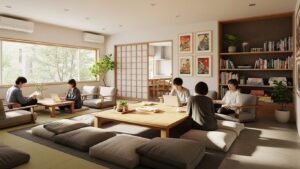
The Rising Status of Share Houses in Japan’s Housing Market
There was a time when Share Houses in Japan were viewed as little more than glorified “cheap hostels” for backpackers and youth in transition. Today, however, that concept has evolved dramatically. With the normalization of remote work, the rise of minimalism, and a genuine return to community to ward off urban isolation, the landscape has shifted. Share Houses have moved from being a “compromise choice” to a “deliberate lifestyle choice.”
In urban hubs like Tokyo, where skyrocketing land prices make living alone a high hurdle, a Share House is now a smart way to maintain a high quality of life. In this article, we’ll take a deep dive into the latest market rates across Japan’s major cities—from luxury private rooms to the latest dormitory specs. If you’re about to start your new life in Japan, consider this your definitive guide.
Defining Room Types and Re-evaluating Their Value
Before comparing prices, we need to be clear about exactly what kind of “rooms” we’re looking at. The Japanese Share House market has become so specialized that the term “private room” no longer covers it all.
① Private Rooms by Price Range
The following rates are based on Tokyo, which has the highest concentration of properties. Prices in regional areas tend to be slightly lower.
Luxury (¥90,000 ($550)–¥150,000 ($917))

This class feels more like “long-term hotel living” than a typical Share House. Located in prime areas like Minato, Shibuya, and Meguro, these properties feature lounges filled with designer furniture. Some come with gyms, professional kitchens, theater rooms, and even dedicated coworking spaces. Professional cleaners visit daily, and it’s common for private rooms to have their own refrigerators and vanity sinks. In my experience, these are popular with engineers and creative professionals.
Standard (¥55,000 ($336)–¥90,000 ($550))
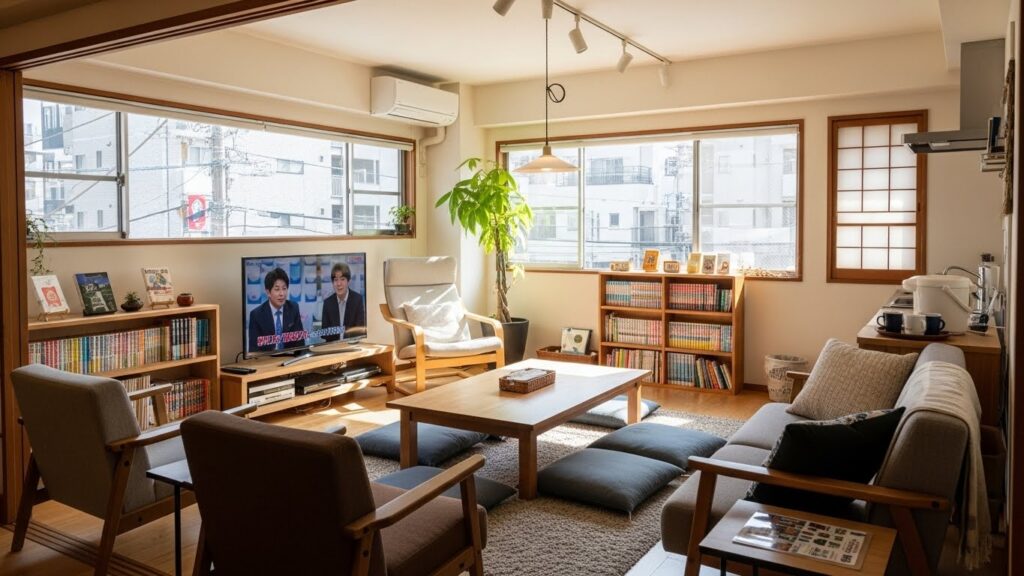 This is the most common “volume zone” in Japan. A typical private room is about 6 tatami mats (approx. 10sqm) and comes standard with air conditioning, a bed, a desk, storage, and sometimes a small fridge. While the kitchen, laundry, and showers are shared, most properties are well-managed by operating companies and kept very clean. This class offers the quintessential Share House experience: total privacy when you want it, and a community in the living room when you want to socialize.
Budget (¥40,000 ($244)–¥55,000 ($336))
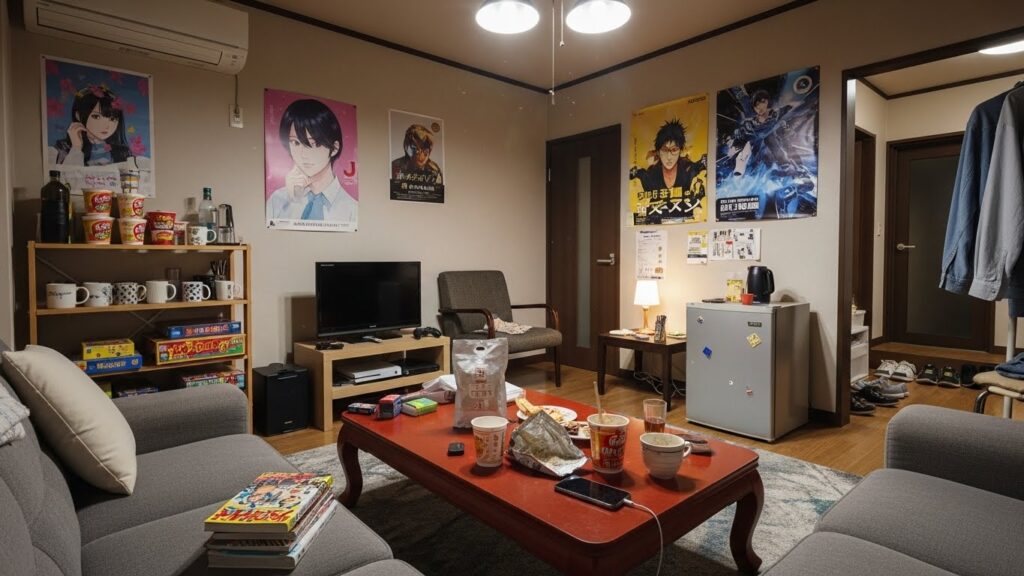
Many of these are renovated older houses with smaller rooms (around 4.5 tatami mats). While facilities are minimal, they are often tucked away in locations with great access to the city center. This is perfect for students or young people who want to slash their fixed costs and spend their money on experiences outside the house.
Since these properties are smaller, the number of residents is low, and people tend to bond quickly. However, the flip side is that if you don’t click with your housemates, the environment can feel a bit tight.
For more on resident demographics, check out this article.
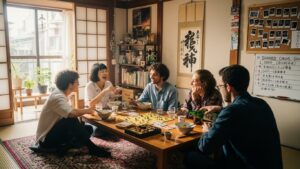
② The Evolution of Dormitories (Shared Rooms)
While dormitories used to be the mainstream for Share Houses in Japan, their numbers dropped significantly after a legal change in 2013.
However, they are still a viable option in some urban centers like Tokyo.
Capsule Hotel Style
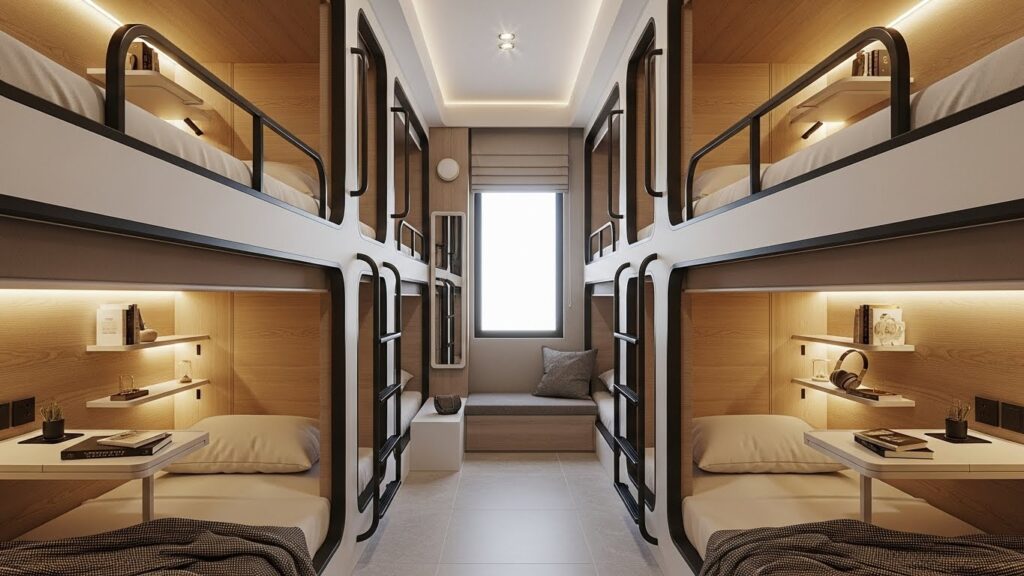
The days of just throwing bunk beds in a room are over. The latest dorms use capsule hotel technology to provide “hideaway” spaces fully partitioned with wood or resin panels. They come with USB ports, light switches, and security lockers at your bedside. Close the curtain, and you’re in your own world. This is a popular choice for those who want to save money without sacrificing personal space.
Because they are expensive to build, not every property offers this specific type.
Classic Style
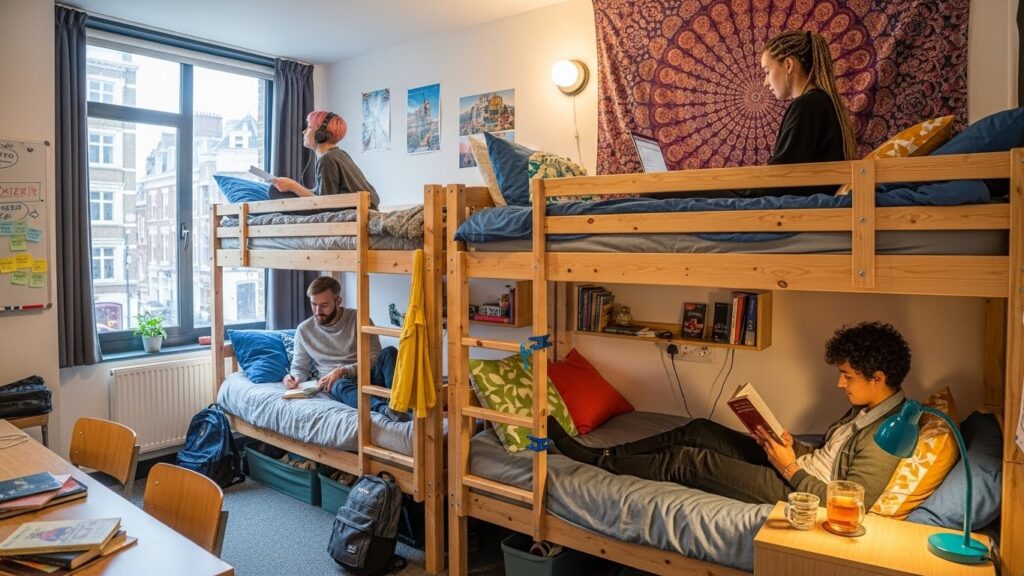
This is the traditional style with 2 to 8 beds in a single room. Privacy is limited, but with monthly rates starting in the ¥20,000 ($122) range, it is the cheapest way to live in Japan.
However, keep in mind that ultra-low prices can sometimes attract “difficult” characters. While some former backpackers love the dorm vibe, those who stay purely because it’s cheap can sometimes be a source of friction. I generally recommend avoiding the absolute cheapest dorms.
Rent Market Ranking by Region: Latest 2026 Data
The Japanese real estate market is directly tied to local economic scale and population density. Here is a thorough comparison of the top five areas.
| Area | Luxury Private | Standard Private | Budget Private | Dormitory |
|---|---|---|---|---|
| Tokyo (Central 23 Wards) | ¥90,000 ($550)+ | ¥68,000 ($416) | ¥48,000 ($293) | ¥40,000 ($244) |
| Tokyo Suburbs / Greater Tokyo | ¥80,000 ($489) | ¥50,000 ($306) | ¥40,000 ($244) | ¥30,000 ($183) |
| Osaka (Kita/Chuo Wards) | ¥70,000 ($428) | ¥48,000 ($293) | ¥32,000 ($196) | ¥28,000 ($171) |
| Fukuoka (Tenjin/Hakata) | ¥70,000 ($428) | ¥40,000 ($244) | ¥35,000 ($214) | ¥25,000 ($153) |
| Other Regional Cities | ¥70,000 ($428) | ¥35,000 ($214) | ¥30,000 ($183) | ¥22,000 ($134) |
Regional Analysis Report
【Tokyo】
Unsurprisingly, Tokyo is the most expensive.
The high rates aren’t just about land value—it’s because Japan’s most “interesting” properties are concentrated here. Large Share Houses often feature professional kitchens, lounges with espresso machines, billiard tables, dart boards, and even private cinemas. When you consider the cost of owning these amenities yourself, ¥80,000 ($489)–¥100,000 ($611) a month is actually a bargain. Areas along the Yamanote and Chuo lines remain the gold standard for accessibility.
Note that if you look slightly outside the city center, prices become much more manageable. Just 20 minutes by train from Shinjuku or Shibuya, rent drops significantly—perfect for those who don’t mind a short commute.
*Pro-tip:* If you have to commute during Tokyo’s legendary rush hours (around 8 AM or 6 PM), I highly recommend finding a place within walking or cycling distance of your destination.
【Greater Tokyo】Strategic Choices in Kanagawa, Chiba, and Saitama
From a foreigner’s perspective, this is often the smartest move. Cities like Yokohama (Kanagawa), Omiya (Saitama), and Ichikawa (Chiba) are only 30 minutes from central Tokyo, yet rent is ¥15,000 ($92)–¥20,000 ($122) cheaper. If you have a ¥70,000 ($428) budget, your Quality of Life (QOL) will be much higher in a spacious, renovated private room in Kanagawa than in a cramped room in central Tokyo.
【Osaka】The Capital of Cost Performance
Osaka isn’t just the “Kitchen of Japan”—it’s the capital of value. Despite being a major metropolis, rent is roughly 20% lower than in Tokyo. You can find very high-quality Share Houses in the ¥50,000 ($306) range with excellent access to “Kita” (Umeda) and “Minami” (Namba). People in Osaka are famously friendly, and Share House communities here tend to be very active.
【Fukuoka】Youthful Energy and a Digital Nomad Paradise
Fukuoka is currently Japan’s most exciting city. Known as a “compact city,” the airport, downtown, and the beach are all within 30 minutes of each other. Rent is even more affordable, with plenty of excellent private rooms for under ¥50,000 ($306). With a booming IT startup scene and a high percentage of young residents, modern and stylish Share Houses are popping up everywhere.
Initial Costs: Why a Share House is Kind to Your Wallet
The “Three Sacred Treasures” of traditional Japanese renting—Security Deposit, Key Money, and Brokerage Fees—are a massive financial burden. Share Houses boldly eliminate or reduce these.
Initial Cost Comparison (For a Private Room in Tokyo)
| Expense Item | Standard Apartment | Share House |
|---|---|---|
| Security Deposit | ¥80,000 ($489) (1 mo. rent) | ¥30,000 ($183) (Flat fee) |
| Key Money (Gift to Landlord) | ¥80,000 ($489) (1 mo. rent) | ¥0 ($0) |
| Brokerage Fee | ¥88,000 ($538) (1 mo. rent + tax) | ¥0 ($0) |
| First Month Rent + CAM | ¥85,000 ($519) | ¥85,000 ($519) |
| Furniture & Appliances | ¥150,000 ($917)〜 | ¥0 ($0) (Included) |
| Total | ¥483,000 ($2,952)〜 | ¥115,000 ($703)〜 |
The difference is clear. With a Share House, you can cut your initial move-in costs to about a quarter of a standard apartment. Furthermore, cleaning fees upon move-out are usually deducted from the deposit or charged as a low flat fee, making the “exit cost” transparent.

4. The “Magic Flat Rate” of Common Area Maintenance (CAM) Fees
Do you think the monthly CAM fee (¥12,000 ($73)–¥20,000 ($122)) is just a management fee? It’s actually the core of the modern subscription-based living style.
- Utility Hedging: Energy prices are volatile in 2026, but most Share Houses include electricity, gas, and water in the CAM fee. Whether you blast the AC in summer or take daily hot baths in winter, your payment stays the same—a huge mental win.
- Professional Cleaning: Most properties have professional cleaning for shared areas 1–3 times a week. Having a pro manage the kitchen, showers, and toilets—the hardest places to keep clean—prevents housemate disputes.
- Auto-Refill of Consumables: Toilet paper, dish soap, trash bags. The time and cost of shopping for these becomes zero.
5. Expert Tips: How to Choose the Right Property
Finally, based on my years of watching the Japanese real estate market, here are the non-negotiable points to check during a viewing.
- Kitchen cleanliness reflects resident quality: Check if dirty dishes are left in the sink or if the fridge is organized. If this area is a mess, the social dynamics in the house might be a mess too.
- Wi-Fi speed tests: Don’t just test in the lounge; test in the corners of the specific “private room” you’ll be renting. Wall materials can sometimes block signals.
- Strictness of “House Rules”: Check for rules like “no overnight guests” or “curfews” that might clash with your lifestyle. Conversely, a house with zero rules is a recipe for late-night noise issues.
- Trash area management: Are residents following local sorting rules? This is the best indicator of the management company’s ability to educate and maintain the property.

A Share House is the “Accelerator” for Your Life in Japan
Understanding the rent market is the same as designing your life portfolio. Do you pay higher rent in Tokyo to enjoy urban entertainment and networking, or do you lower your fixed costs in Fukuoka to dive into your own projects? Japan’s Share Houses offer these diverse choices with lower barriers to entry than ever before.
The prices shown here are guidelines, but in 2026 Japan, if a price is significantly lower, there is usually a reason (thin walls, inconvenience). If it’s higher, expect added value (community, facilities, location). Combine your intuition with this data, and start your best new chapter in Japan.